


Bien dormir enceinte sur le côté, sans douleur de hanche
La grossesse bouleverse beaucoup de choses, et le sommeil n'y échappe pas. Entre le ventre qui s'arrondit, les hanches qui tirent et l'envie permanente de bouger, trouver une position confortable relève parfois du défi. Beaucoup de futures mamans connaissent ces nuits hachées, ces réveils avec une hanche douloureuse. Rassurez-vous : avec quelques ajustements simples, dormir sur le côté peut redevenir un vrai repos. On vous explique tout, en douceur.
Pourquoi le côté gauche est souvent recommandé
Si vous avez fait quelques recherches, vous avez sûrement croisé ce conseil : dormir sur le côté gauche. Ce n'est pas un hasard.
À mesure que l'utérus grandit, son poids peut comprimer un gros vaisseau sanguin situé à droite de la colonne, la veine cave inférieure. Cette veine ramène le sang vers le cœur depuis le bas du corps. En vous allongeant sur la gauche, vous la libérez, ce qui favorise une bonne circulation, pour vous comme pour votre bébé. Des organisations médicales reconnues comme la Mayo Clinic recommandent cette position.
Cela dit, ne culpabilisez pas si vous changez de côté. Le côté droit reste une option correcte, surtout si le gauche devient inconfortable. Alterner permet aussi de répartir les points de pression. La règle d'or, finalement, reste d'écouter votre corps et d'éviter de rester longtemps sur le dos après le milieu de grossesse.
D'où viennent ces douleurs de hanche la nuit ?
Si votre hanche vous réveille, plusieurs phénomènes se combinent. Comprendre leur origine aide à mieux les soulager.
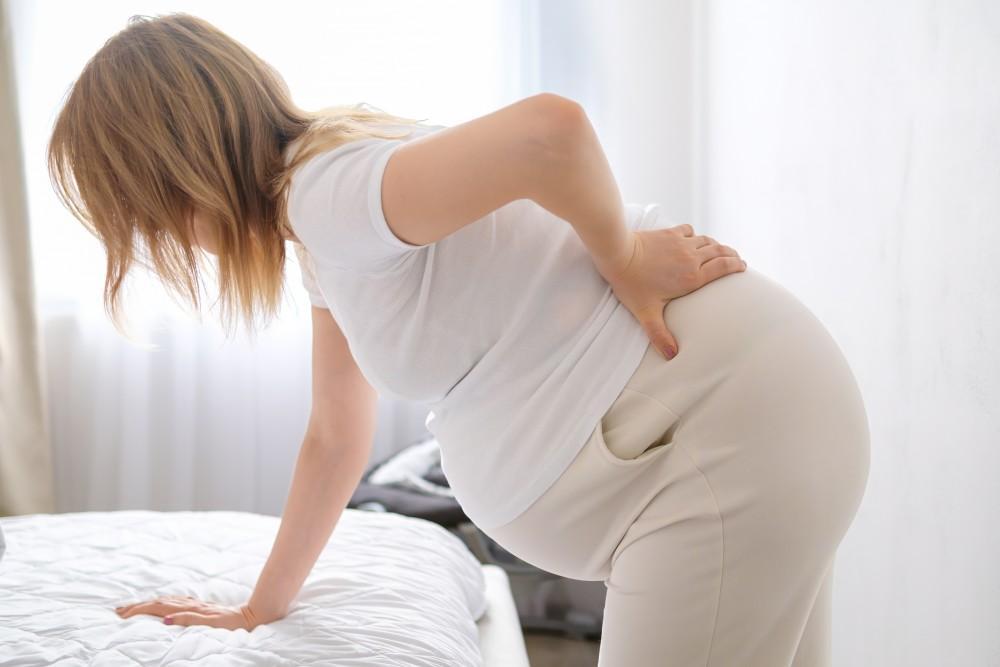
D'abord, il y a la relaxine. Cette hormone, libérée pendant la grossesse, détend les ligaments du bassin pour préparer l'accouchement. Son but est positif, mais elle rend aussi les articulations plus mobiles, parfois instables, ce qui peut générer de l'inconfort.
Ensuite, il y a le poids et la pression. Dormir toujours du même côté concentre l'appui sur une seule hanche, nuit après nuit. La pression prolongée sur cette zone peut créer une sensation douloureuse au réveil.
Enfin, le bassin a tendance à basculer quand la jambe du dessus glisse vers l'avant sans soutien. Cette torsion sollicite les articulations sacro-iliaques et peut réveiller des douleurs dans le bas du dos, la fesse, voire la jambe.
Le geste clé : un coussin entre les genoux
S'il fallait retenir une seule astuce, ce serait celle-ci. Placer un soutien entre les genoux change radicalement le confort de la position latérale.
Pourquoi ? Parce qu'il empêche la jambe du dessus de tomber vers l'avant. En gardant vos genoux écartés et vos hanches parallèles, dans le prolongement de la colonne, il évite la torsion du bassin. Le résultat se ressent immédiatement : moins de tension dans le bas du dos, moins de pression sur les hanches, et une colonne qui reste dans une position neutre.
C'est un conseil largement partagé par les sources spécialisées dans le sommeil de la femme enceinte, comme le détaille cet article sur les positions de sommeil pendant la grossesse. Le bon soutien fait souvent toute la différence entre une nuit difficile et un vrai repos.
Un détail important : l'épaisseur du soutien compte. Trop épais, il écarte excessivement les hanches. Trop fin, il laisse le bassin tourner. L'idéal est un coussin qui garde une forme stable et adaptée.
Comment le coussin Pillova accompagne vos nuits de grossesse
Beaucoup de futures mamans tentent l'astuce avec un oreiller classique. Le souci, c'est qu'il s'écrase sous le poids, glisse pendant la nuit et finit par tomber. On se réveille alors pour le repositionner, ce qui ajoute encore un réveil à des nuits déjà fragmentées.
Le coussin d'alignement Pillova répond précisément à ce besoin. Conçu pour se glisser entre les genoux, il garde une forme stable grâce à sa mousse à mémoire de forme à densité contrôlée, qui ne s'affaisse pas au fil des heures. Sa sangle réglable le maintient en place toute la nuit, même quand vous changez de côté, ce que vous ferez forcément en cours de grossesse. Plus besoin de le rechercher à tâtons.
Il aligne le bassin et la colonne, garde les genoux écartés, soulage la pression sur les hanches et apaise le bas du dos. Sa housse déhoussable et lavable est un vrai plus au quotidien, surtout durant cette période. Pensé pour les personnes qui dorment sur le côté, il accompagne naturellement la position latérale recommandée pendant la grossesse.
Il est important de le préciser : le coussin Pillova est un accessoire de bien-être, pas un dispositif médical. Il ne remplace ni le suivi de votre grossesse ni l'avis de votre sage-femme ou de votre médecin. En cas de douleur de hanche importante ou persistante, parlez-en à un professionnel de santé, qui pourra vous orienter, par exemple vers un suivi en ostéopathie ou en kinésithérapie.
Quelques gestes complémentaires pour des nuits plus douces
Le coussin entre les genoux est central, mais d'autres habitudes soutiennent votre sommeil pendant la grossesse.
- Surélevez légèrement le buste si vous souffrez de remontées acides. Quelques oreillers sous le haut du corps aident à limiter le reflux, fréquent en fin de grossesse.
- Calez votre dos avec un oreiller supplémentaire pour éviter de basculer sur le dos pendant la nuit.
- Tournez-vous en bloc, épaules et hanches ensemble, plutôt qu'en torsion brusque, pour ménager votre bassin.
- Bougez vos chevilles avant de dormir, par quelques flexions, pour activer la circulation et limiter les jambes lourdes.
- Gardez une chambre fraîche, autour de 18 à 19°C, car la température corporelle a tendance à être plus élevée pendant la grossesse.
Si les fourmillements ou les crampes persistent malgré tout, n'hésitez pas à en parler à votre sage-femme : un déficit en magnésium ou en fer peut parfois être en cause, indépendamment de votre position.


