


Sleeping on your side during pregnancy without hip pain
Pregnancy turns many things upside down, and sleep is no exception. Between a growing belly, aching hips, and the constant urge to move, finding a comfortable position can sometimes feel like a challenge. Many expectant mothers experience these fragmented nights and wake up with a painful hip. Rest assured: with a few simple adjustments, sleeping on your side can become truly restful again. We'll explain everything, gently.
Why the left side is often recommended
If you've done some research, you've probably come across this advice: sleep on your left side. This is no coincidence.
As the uterus grows, its weight can compress a large blood vessel on the right side of the spine, the inferior vena cava. This vein carries blood back to the heart from the lower body. By lying on your left, you free it, which promotes good circulation for both you and your baby. Recognized medical organizations like the Mayo Clinic recommend this position.
That said, don't feel guilty if you switch sides. The right side remains a good option, especially if the left becomes uncomfortable. Alternating also helps distribute pressure points. Ultimately, the golden rule is to listen to your body and avoid lying on your back for extended periods after mid-pregnancy.
What causes these hip pains at night?
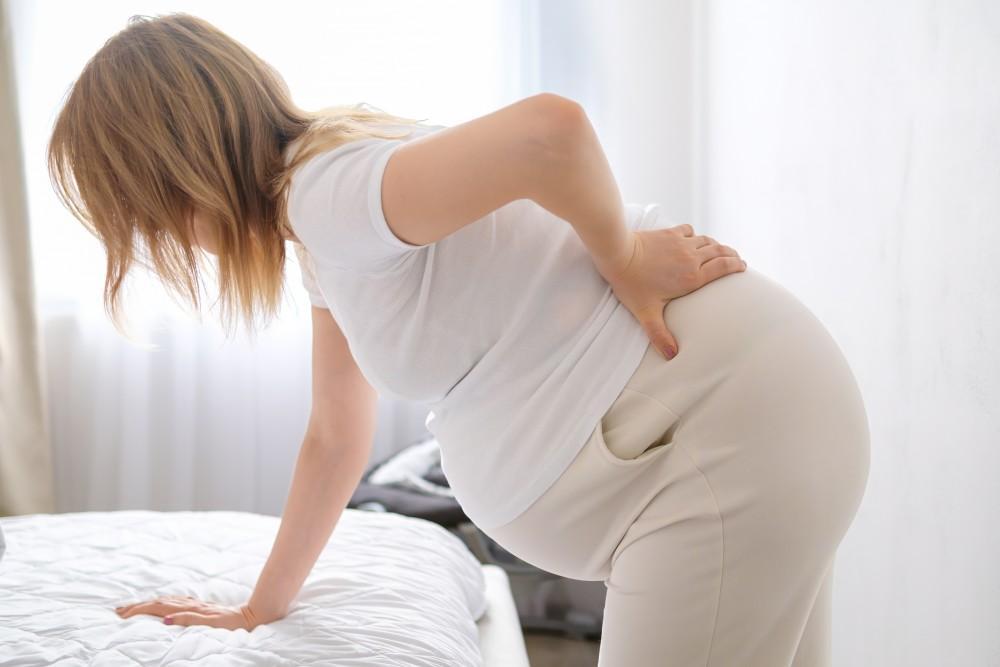
If your hip wakes you up, several phenomena are combining. Understanding their origin helps relieve them better.
First, there's relaxin. This hormone, released during pregnancy, relaxes the pelvic ligaments to prepare for childbirth. Its purpose is positive, but it also makes joints more mobile, sometimes unstable, which can cause discomfort.
Then, there's weight and pressure. Sleeping always on the same side concentrates support on one hip, night after night. Prolonged pressure on this area can create a painful sensation upon waking.
Finally, the pelvis tends to tilt when the top leg slides forward without support. This twisting stresses the sacroiliac joints and can trigger pain in the lower back, buttock, or even the leg.
The key move: a cushion between your knees
If there was only one tip to remember, this would be it. Placing support between your knees radically changes the comfort of the side sleeping position.
Why? Because it prevents the top leg from falling forward. By keeping your knees apart and your hips parallel, in alignment with your spine, it avoids pelvic twisting. The result is immediately felt: less tension in the lower back, less pressure on the hips, and a spine that stays in a neutral position.
This is advice widely shared by specialized sources on pregnant women's sleep, as detailed in this article on sleeping positions during pregnancy. The right support often makes all the difference between a difficult night and true rest.
An important detail: the thickness of the support matters. Too thick, it spreads the hips too much. Too thin, it allows the pelvis to rotate. The ideal is a cushion that maintains a stable and adapted shape.
How the Pillova cushion supports your pregnancy nights
Many expectant mothers try the trick with a classic pillow. The problem is that it flattens under weight, slips during the night, and eventually falls off. You then wake up to reposition it, which adds another awakening to already fragmented nights.
The Pillova alignment cushion precisely meets this need. Designed to slip between the knees, it maintains a stable shape thanks to its controlled-density memory foam, which does not sag over the hours. Its adjustable strap keeps it in place all night, even when you change sides, which you will inevitably do during pregnancy. No need to grope for it anymore.
It aligns the pelvis and spine, keeps the knees apart, relieves pressure on the hips, and soothes the lower back. Its removable and washable cover is a real plus for daily life, especially during this period. Designed for side sleepers, it naturally supports the lateral position recommended during pregnancy.
It is important to clarify: the Pillova cushion is a wellness accessory, not a medical device. It does not replace the monitoring of your pregnancy or the advice of your midwife or doctor. In case of significant or persistent hip pain, talk to a healthcare professional, who can guide you, for example, towards osteopathy or physiotherapy follow-up.
A few additional tips for gentler nights
The cushion between the knees is central, but other habits support your sleep during pregnancy.
- Slightly elevate your torso if you suffer from acid reflux. A few pillows under your upper body help limit reflux, which is common in late pregnancy.
- Prop your back with an extra pillow to prevent rolling onto your back during the night.
- Turn in one block, shoulders and hips together, rather than with a sudden twist, to spare your pelvis.
- Move your ankles before sleeping, with a few flexions, to activate circulation and limit heavy legs.
- Keep your bedroom cool, around 18-19°C, as body temperature tends to be higher during pregnancy.
If tingling or cramps persist despite everything, do not hesitate to talk to your midwife: a magnesium or iron deficiency can sometimes be the cause, regardless of your position.


